#2 Genocide in Two Modes
- alecj444
- Nov 3
- 3 min read
Updated: 6 days ago
Both The Act of Killing, directed by Joshua Oppenheimer (2012), and Night and Fog, directed by Alain Resnais (1956), confront state-sanctioned mass murder, yet they do so with strikingly different formal strategies and moral aims. Comparing them highlights how documentary form shapes ethical meaning. Resnais’s film insists on sober remembrance through archival evidence and contemplative narration, while Oppenheimer’s film provokes moral exposure by letting perpetrators perform their crimes as theatrical fantasies. Reading these differences through Nichols’s discussion of documentary modes and voices helps show how formal choices make distinct arguments about war, genocide, memory, and responsibility.
In terms of Nichols’s documentary modes, Night and Fog leans toward an expository/poetic hybrid. Resnais uses archival black-and-white images of camps and victims, intercut with serene contemporary color shots of empty landscapes and abandoned barracks. The film’s calm, authoritative voiceover and its juxtaposition strategy produce an argument about memory: the visible traces of atrocity are tied to a moral imperative not to forget. The slow, measured editing, minimal camera movement in the present-day sequences, and stark, often disturbing archival images, makes the film function as a historical indictment. Resnais asks the viewer to observe evidence and to hold the world accountable by remembering. In this way, the voice of the film is didactic but mournful; it insists on documentary as testimony and historical record.
By contrast, The Act of Killing explicitly engages the performative mode: the film invites former death squad leaders to reenact their past crimes in the cinematic genres they admire (gangster films, musicals, westerns). This choice foregrounds subjectivity and emotional truth rather than straightforward historical documentation. The perpetrators’ reenactments are shot in vivid color and cinematic lighting; they reveal how fantasy, ego, and ideology helped normalize violence. When Anwar Congo and others stage themselves as Hollywood heroes who “eliminated” enemies, the film exposes a chilling logic: genocide is experienced by perpetrators as routine theatre that validates power and masculinity. The director’s intervention, giving them cameras, costumes, and an audience, functions reflexively too; the film makes viewers aware of how representation shapes memory and how cinematic artifice can both conceal and reveal moral states.
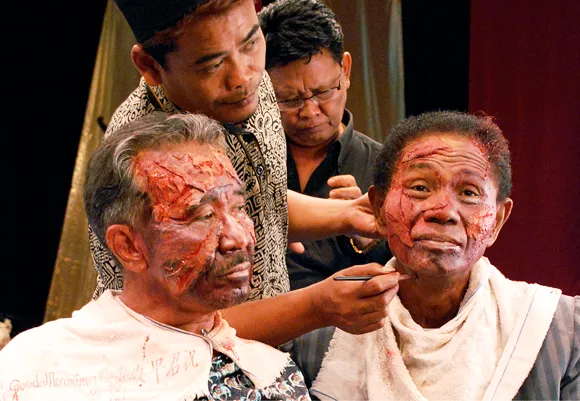
Both films use juxtaposition and editing, but to different ends. Resnais juxtaposes past images with present silence to show erasure and the risk of forgetting; his analytic montage directs sympathy toward victims and toward collective memory. Oppenheimer juxtaposes staged fantasy with offstage reactions like laughter, boasting, and then visible discomfort when perpetrators confront footage of their own actions, to produce moral dissonance. In one striking pattern, the performers’ boldness collapses when confronted with the consequences of their acts, signaling that performance can open self-justifying narratives. Where Resnais’s formal restraint cultivates witness and mourning, Oppenheimer’s theatrical excess functions as an accusation: spectacle reveals responsibility.
Ethically, the two films also diverge. Night and Fog places responsibility on systems and societies: its tone implies a civic duty to remember and to prevent recurrence. The Act of Killing puts responsibility on human agents and on the cinematic medium itself: by giving voice and stage to perpetrators, the film forces viewers to witness how ideological violence is constructed and celebrated. Resnais’s voice speaks as an external moral conscience; Oppenheimer’s film cultivates a chorus of troubling voices, using their own logic against them.
Overall, both films address genocide through form as much as through content. Resnais builds a memorial-argument through sobering evidence and reflective narration; Oppenheimer stages a moral unmasking by letting perpetrators dramatize themselves. Together, they demonstrate the power and limits of documentary.



Comments